

Table of contents
- Introduction
- What economic systems existed in pre-colonial Africa?
- Was pre-colonial Africa only a subsistence economy?
- How did pre-colonial African trade work?
- Did Africans use money before Europeans arrived?
- Was there manufacturing in pre-colonial Africa?
- How did ironworking change African societies?
- How did people learn specialised skills in pre-colonial Africa?
- How did agriculture work in pre-colonial Africa?
- What role did stewardship play in pre-colonial African economic life?
- What can pre-colonial economic systems teach us about institution building?
- What did colonialism change about African economic systems?
- Why does pre-colonial African economic history matter today?
- What can Africa’s economic past teach today’s leaders about work?
- What does the book, Before the West Worked , add to this conversation?
- Conclusion: Reclaim the History. Build the Future.
Introduction
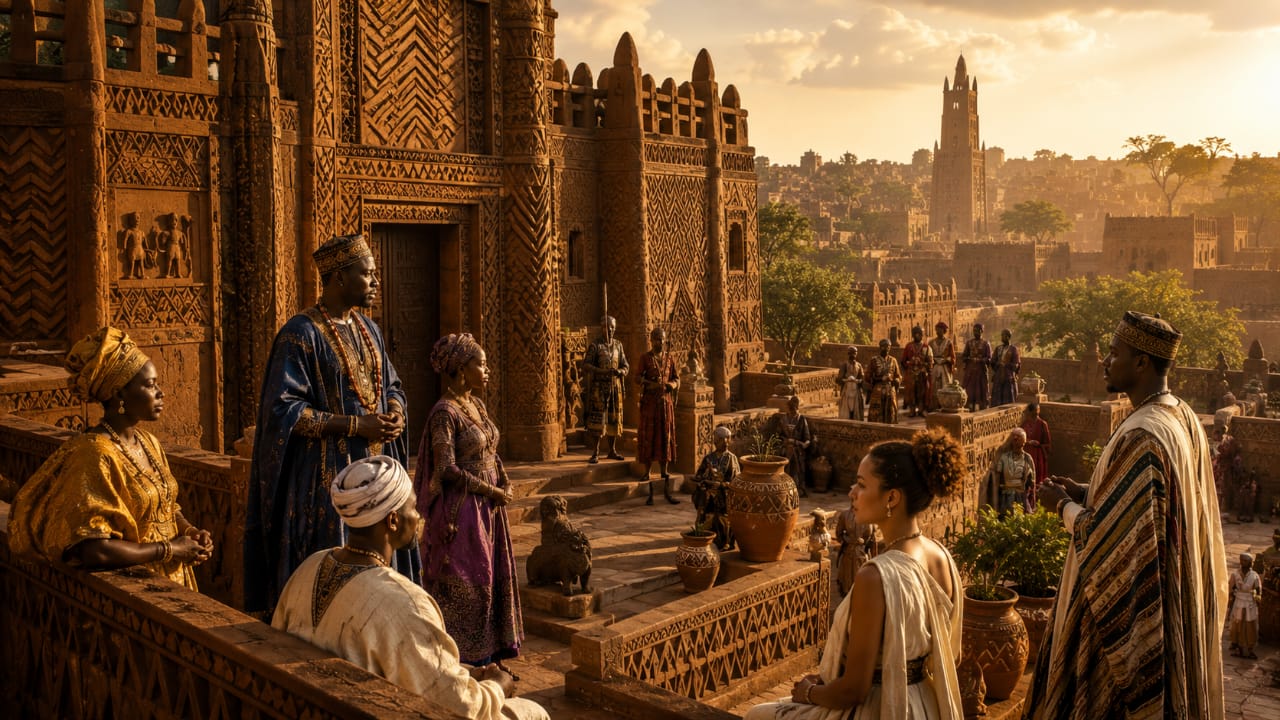
Pre-colonial African economies were diverse and organised around agriculture, trade, specialised production, mining, metallurgy, craft, and systems of exchange, revealing societies capable of creating value and adapting to complex economic environments.
For generations, dominant historical narratives portrayed Africa before European colonialism as economically undeveloped, technologically limited, and largely organised around subsistence activity. That picture is incomplete.
Long before European colonial rule, African societies developed diverse systems for producing, exchanging, governing, and distributing value. Across different regions and historical periods, communities built trading networks, developed forms of currency and exchange, mastered metallurgy and specialised crafts, organised agricultural production, transmitted technical knowledge, and created institutions for regulating economic relationships.
The historical evidence supports a more complicated picture. The African Economic History Network’s research on pre-colonial production, for example, describes societies engaged in agriculture, mining, hunting and gathering, and manufacturing, while emphasising their capacity for adaptation and specialisation.
Africa was never a single economic or political unit. Kingdoms, city-states, trading centres, farming communities, pastoral societies and other social formations developed systems suited to their environments, resources and historical circumstances.
These societies were not perfect. They experienced conflict, inequality, political competition, slavery, environmental pressures and technological limitations. Their systems also varied considerably, yet their history reveals something fundamental: African societies had the capacity to organise work, create value, solve problems, develop expertise and sustain communities through locally developed systems.
That history matters because the way we understand Africa’s economic past influences the way we imagine Africa’s economic future.
What economic systems existed in pre-colonial Africa?
Pre-colonial African economic systems included agriculture, pastoralism, trade, mining, specialised crafts and manufacturing, with different societies adapting production and exchange to their environments, technologies, institutions and social structures.
The phrase pre-colonial African economy can be misleading if it suggests a single system. There was no single African economy.
Economic organisation differed across regions and periods. Some societies relied heavily on agriculture; others combined farming with pastoralism, fishing, hunting, mining or craft production. Some developed major trading centres and centralised states, while others organised economic life through smaller, kin-based communities.
The important point is that economic activity existed on a spectrum of complexity and specialisation.
The evidence also challenges the idea that subsistence production was the only meaningful activity. Agriculture was central to many societies, but trade, specialisation and production for exchange also played important roles.
What were the main economic activities in pre-colonial Africa?
Across different societies, major economic activities included:
- Agriculture and livestock keeping
- Trade and commerce
- Craft production
- Ironworking and metallurgy
- Mining
- Fishing
- Hunting and gathering
- Textile production
- Pottery and leatherworking
- Long-distance commerce
Current educational materials continue to frame agriculture, handicrafts and trade as major economic activities in pre-colonial African societies.
The more useful historical question, therefore, is not whether Africans had economies. It is: How did different African societies organise production and exchange to meet their needs and create value?
Was pre-colonial Africa only a subsistence economy?
No. Subsistence production was important across many African societies, but it existed alongside specialised crafts, local markets, regional trade, mining, manufacturing and long-distance commercial networks.
The label subsistence economy can obscure more than it explains. Every economy must meet basic needs. The presence of food production for household or community consumption does not mean that people produced only for themselves.
Specialisation creates exchange. A farmer may need tools. A blacksmith may need food. A pastoralist may need grain. A trader may need products from several regions. That interdependence creates markets.
Historical evidence from pre-colonial Africa shows precisely this relationship between specialisation, exchange and economic adaptation. The distinction matters because describing African economies as purely subsistence-based can make productive specialisation and commercial activity almost invisible.
How did pre-colonial African trade work?
Pre-colonial African trade operated through local markets, regional exchange networks and long-distance routes connecting producers, merchants and consumers across communities and regions.
Trade developed because communities did not possess the same resources, skills or products. Different societies specialised in different activities, creating reasons to exchange.
Historical teaching materials document both local and regional trade, including exchange between agricultural and pastoral communities and the development of long-distance routes.
What did Africans trade before colonialism?
Commodities varied considerably across regions and periods, but included:
- Gold
- Salt
- Agricultural products
- Livestock
- Textiles
- Leather
- Metals
- Tools
- Pottery
- Craft products
The Trans-Saharan trade connected West Africa with North Africa and the wider Mediterranean world. East African commercial networks also connected interior societies with the Indian Ocean world.
Trade therefore moved more than commodities. It also moved people, ideas, technologies, information and cultural practices.
Why did trade develop in pre-colonial Africa?
Trade often emerged from three fundamental conditions:
- Different resources — communities possessed different goods.
- Specialisation — people developed different occupations and skills.
- Demand — communities wanted goods they could not easily produce themselves.
This relationship between specialisation and exchange is particularly important. Production creates value. Specialisation increases capability. Exchange connects capability to need. That is a principle modern economies still depend upon.
Did Africans use money before Europeans arrived?
Yes. Different African societies used various forms of money and exchange, including cowries, gold, metal objects, cloth and other recognised commodities, depending on the society and historical period.
Pre-colonial African exchange was not based exclusively on barter. Different societies used different media of exchange. Historical educational sources, for example, identify cowries, gold and copper among objects that functioned as money in particular contexts.
Other sources document commodities such as salt, iron objects, cloth and precious metals serving monetary or exchange functions in different African settings.
The important lesson is not that pre-colonial Africa had a modern monetary system but that African societies developed locally meaningful systems for assigning, transferring and storing value.
Was there manufacturing in pre-colonial Africa?
Yes. African societies developed specialised production in ironworking, metal casting, textiles, pottery, leatherworking, woodworking and other crafts, although the scale and complexity varied across regions.
Manufacturing did not begin with the modern factory. At its foundation, manufacturing is the ability to transform materials, knowledge, tools and human skill into useful value.
Across different parts of Africa, specialised producers developed expertise in iron, gold, copper alloys, textiles, leather, wood, clay and other materials.
The African Economic History Network identifies manufacturing and mining alongside agriculture and other forms of production in its account of pre-colonial African economies.
What did specialised production reveal about African societies?
Specialisation required more than individual talent.
It required:
- Technical knowledge
- Access to materials
- Tools and equipment
- Occupational training
- Quality standards
- Knowledge transmission
- Markets or users for the finished products
That is the beginning of an industrial system.
What do Ife and Benin reveal about African craftsmanship?
The metalworking and lost-wax casting traditions associated with Ife and the Kingdom of Benin provide striking evidence of specialised technical and artistic capability. These traditions required knowledge of materials, design, production processes and cultural conventions.
Such achievements remind us that manufacturing is not simply about factories. Manufacturing begins with people who know how to transform resources into value.
That raises a question contemporary Africa cannot avoid: Are we developing enough people with the practical capability to make, maintain, improve and innovate?
How did ironworking change African societies?
Ironworking expanded the ability of many African societies to produce agricultural tools, weapons and other implements while creating specialised technical knowledge that supported wider systems of production.
Iron technology did not develop identically across Africa, and its adoption occurred at different times and under different circumstances. Yet where ironworking became established, it could affect agriculture, craft production, warfare and other forms of economic activity.
Iron tools could support agricultural production. Blacksmithing created specialised occupations. Metallurgical knowledge created new forms of technical expertise.
The larger lesson is about technology as applied knowledge. Technology becomes economically significant when people can develop, adapt and use it to solve practical problems. That remains true today.
A country can import sophisticated machinery and still remain technologically dependent if it lacks the human capability to maintain, adapt and improve what it imports.
How did people learn specialised skills in pre-colonial Africa?
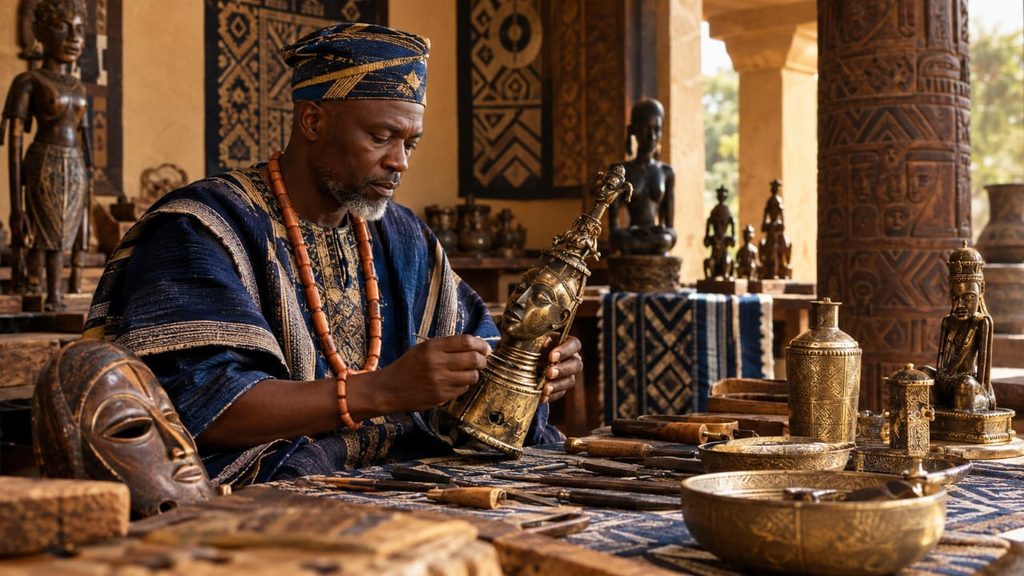
Practical knowledge was often transmitted through apprenticeship, family occupations, craft communities and hands-on training, connecting learning with productive activity, professional standards and social responsibility.
An apprentice did not simply memorise information about a craft.
- The learner watched.
- Practised.
- Made mistakes.
- Received correction.
- Practised again.
- Eventually, the learner became capable of independent work.
Modern education requires much more than apprenticeship. Contemporary economies need universities, scientific research, laboratories, digital capabilities and advanced professional training. Yet one principle remains highly relevant: Education should produce capability, not merely credentials.
This is a central concern for capacity building and nation building. A nation does not become productive simply because more people receive certificates. It becomes productive when its people can solve problems, create value, operate systems, build institutions and improve what they inherit.
How did agriculture work in pre-colonial Africa?
Agricultural systems varied across Africa, adapting production to local climates, soils, crops, livestock, labour availability and environmental conditions rather than following one continental model.
Agriculture was central to many African economies, but agricultural production should not be confused with economic simplicity.
Africa’s ecological diversity demanded different forms of knowledge. What worked in the Sahel could not simply be transferred to the forest zones. Highland environments presented different challenges from savannahs and coastal regions.
The African Economic History Network’s research similarly emphasises that pre-colonial production systems varied according to geography, available resources and environmental conditions.
Farmers therefore developed knowledge through:
- Observation
- Experimentation
- Crop selection
- Intercropping
- Soil management
- Livestock integration
- Local adaptation
- Accumulated experience
This provides an enduring leadership principle: Good systems respond to context. A policy designed elsewhere cannot simply be transplanted and expected to work.
Strategic leadership begins with diagnosis before intervention.
What role did stewardship play in pre-colonial African economic life?
Land and natural resources were organised through varied customary, communal, lineage-based and other arrangements, often connecting production with community, inheritance, responsibility and continuity.
It is important not to generalise. African societies developed different land-tenure arrangements, and some included forms of individual ownership, elite control or unequal access. Yet in many settings, land carried responsibilities extending beyond immediate individual gain. Production could be connected to family, community, inheritance and future generations.
This introduces an important principle for contemporary leadership: Economic productivity and stewardship do not have to be opposites. An economy can create value while asking what happens to the resources, institutions and communities that future generations will inherit.
That is not merely an environmental question. It is a question of leadership responsibility.
What can pre-colonial economic systems teach us about institution building?
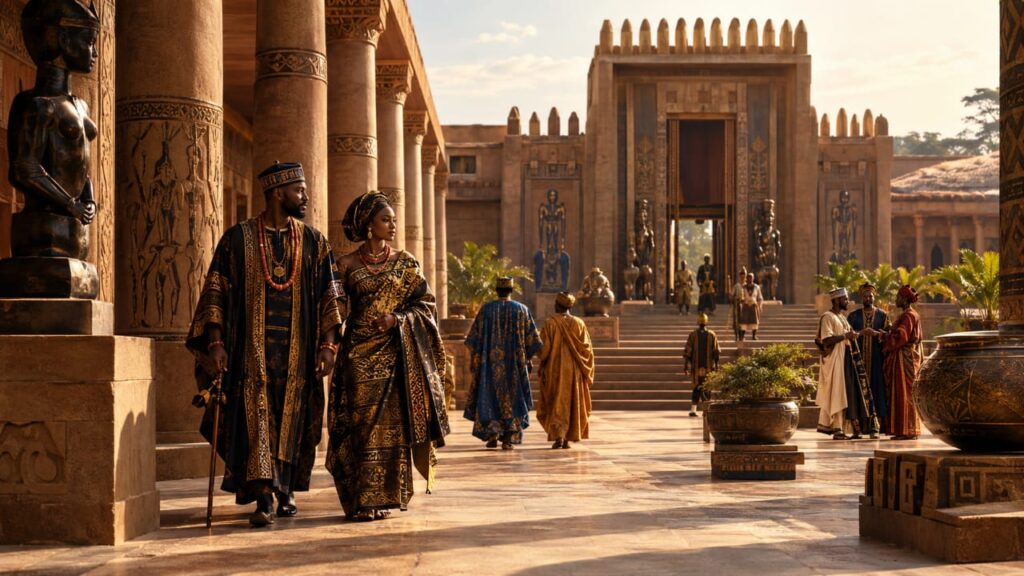
Pre-colonial economic systems show that productive societies require capability, trust, knowledge transfer, specialisation, adaptation and stewardship—principles that remain essential to modern governance and nation building.
This is where historical recovery becomes strategically relevant to the work of the Centre for Transformational Leadership.
The objective is not to recreate pre-colonial institutions but to identify principles that can inform modern institutions.
Pre-Colonial Principles for Contemporary Institution Building
| Historical capability | What it required | Contemporary institutional application | Nation-building outcome |
| Value creation | Skilled work that transformed resources into useful goods | Productive enterprises, manufacturing and entrepreneurship | Higher economic productivity |
| Specialisation | People developing mastery in specific occupations | Technical education, professional formation and vocational systems | Stronger human capability |
| Exchange | Markets, trust, recognised value and relationships | Efficient markets, commercial institutions and predictable regulation | Economic participation |
| Knowledge transfer | Apprenticeship, mentorship and occupational continuity | Knowledge management, succession and professional development | Institutional continuity |
| Adaptation | Responding to local environments and changing conditions | Context-sensitive policy and governance reform | More effective institutions |
| Stewardship | Responsibility for resources and continuity | Ethical management of public, natural and institutional assets | Long-term national resilience |
| Accountability | Social obligations and systems governing relationships | Transparent leadership and institutional responsibility | Public trust |
This is the bridge between history and strategy.
The question is not: How do we recreate the past?
The question is: What principles of organised human capability can we adapt for the future?
What did colonialism change about African economic systems?
Colonialism did not introduce economic organisation into an otherwise empty African space; it encountered existing systems and restructured production, labour, trade, taxation and institutions around new political and commercial priorities.
Recognising the sophistication of pre-colonial African economies does not require pretending that African societies were perfect. They were not.
Historical honesty requires us to acknowledge conflict, inequality, slavery, political competition, environmental pressures and technological limitations alongside achievement.
The more important point is that colonialism encountered existing economic systems. It then reorganised many of them.
In different territories, colonial rule reshaped production, labour, taxation, land, infrastructure and trade. Economies were increasingly integrated into systems designed around imperial political and commercial priorities.
The consequences were not only economic. They also influenced understandings of:
- Work
- Authority
- Education
- Production
- Value
- Progress
- Leadership
That is where the historical question becomes a contemporary one.
Why does pre-colonial African economic history matter today?
Pre-colonial African economic history matters because it challenges dependency narratives and provides evidence that African societies developed traditions of production, commerce, technical learning, governance and stewardship before colonial intervention.
History matters when it changes the questions we ask in the present. If we begin with the assumption that African societies had no meaningful economic systems before colonialism, development can easily become a process of importing solutions.
dr dotun reju
If we recognise existing traditions of production, commerce, technical education, governance and stewardship, a different question becomes possible: What can we recover, adapt and rebuild from principles that enabled African societies to create value on their own terms?
This does not mean returning to the past. Modern African economies operate in a fundamentally different global environment.
It means developing the confidence and discernment to learn from history without becoming imprisoned by it.
What principles are worth recovering?
Several principles remain highly relevant:
- Dignity of work
- Mastery of practical skills
- Local production
- Value creation
- Intergenerational responsibility
- Community stewardship
- Institutional accountability
- Adaptation to local realities
These principles have implications for education, manufacturing, entrepreneurship, agriculture, governance and leadership.
What can Africa’s economic past teach today’s leaders about work?
Africa’s economic past suggests that work can be understood not only as employment, but as a means of creating value, developing capability, serving communities, transmitting knowledge and contributing to the future.
This may be the deeper question beneath the entire historical conversation.
Not simply: Did Africa have sophisticated economies?
But: What did African societies believe work was for?
Was work merely a means of individual survival? Or was it also a means of creating value, sustaining families, serving communities, developing skills, preserving knowledge and contributing to future generations?
Economic systems are never only about money. They also express values.
They tell us:
- What society considers productive.
- Whose work receives recognition.
- What education should prepare people to do.
- How wealth should be created and used.
- What responsibilities individuals have toward others.
- What leaders owe the institutions they inherit.
That is why recovering Africa’s economic history is not an exercise in nostalgia. It is part of the conversation about what kind of economic and social future Africa wants to build.
What does the book, Before the West Worked, add to this conversation?
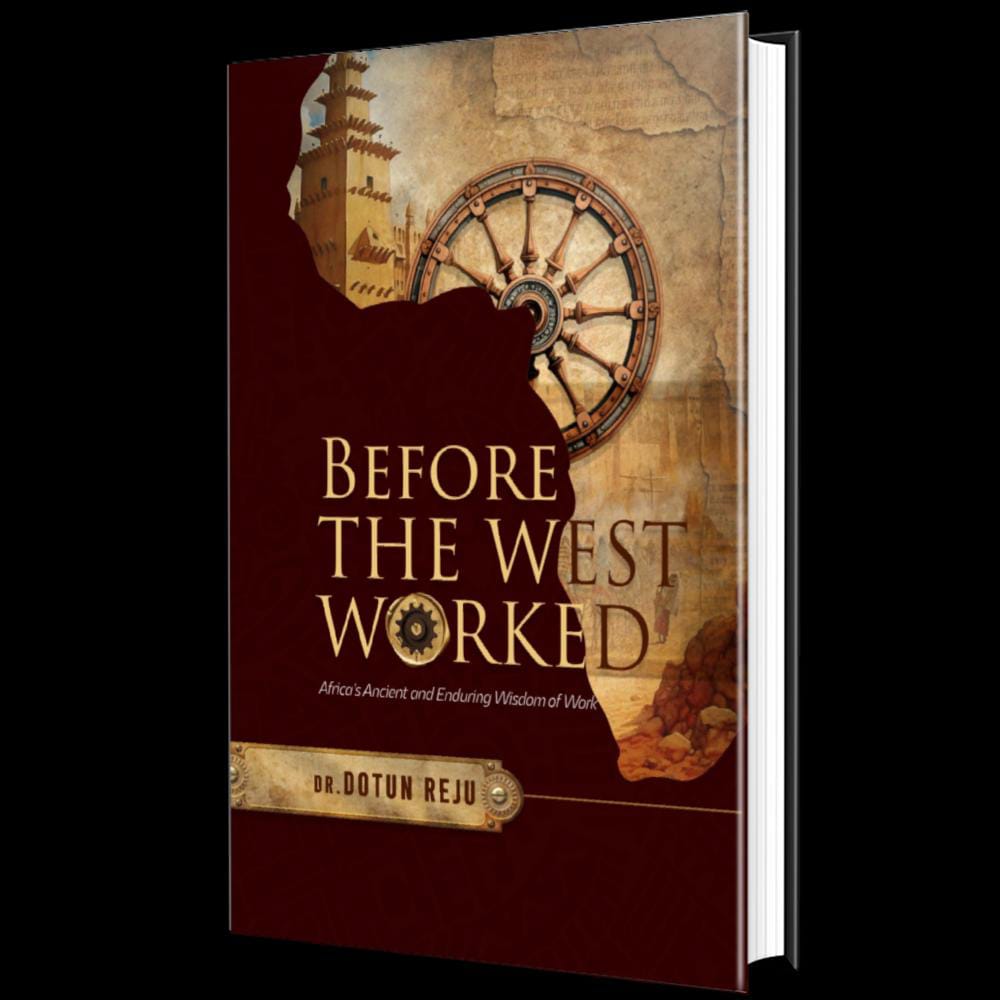
Dr. Dotun Reju’s Before the West Worked examines the historical foundations of African work and asks what contemporary Africa can recover about productivity, responsibility, value creation, leadership and nation building.
The question is not simply what went wrong.
It is also: What did we once understand about work that we may have forgotten?
In Before the West Worked, Dr. Dotun Reju explores the historical meaning and organisation of work in Africa before Western systems reshaped its structures and values.
The book moves beyond nostalgia to examine the relationship between:
Work → Value → Productivity → Leadership → Nation Building
For the Centre for Transformational Leadership, that conversation connects to a larger institutional challenge:
How do we develop people who do not simply seek positions within institutions, but possess the character and capability to strengthen those institutions?
That is the work of Building Nation Builders.
Order your copy of the book in Nigeria and find details about the book tour across various cities:
https://www.patrisng.org/before-the-west-worked
For delivery to readers outside Nigeria, copies are available to order on Amazon:
https://www.amazon.com/dp/978631803X/ref=tmm_pap_swatch_0
Conclusion: Reclaim the History. Build the Future.
Understanding how African societies organised work, production, exchange, technical knowledge and stewardship gives today’s leaders a stronger foundation for thinking about the continent’s future.
The task is neither to romanticise African history nor to dismiss it. The task is to understand it well enough to learn from it.
That is the conversation at the heart of Before the West Worked by Dr. Dotun Reju.
Order your copy and continue the conversation with us about work, productivity, leadership and nation building.