
Introduction
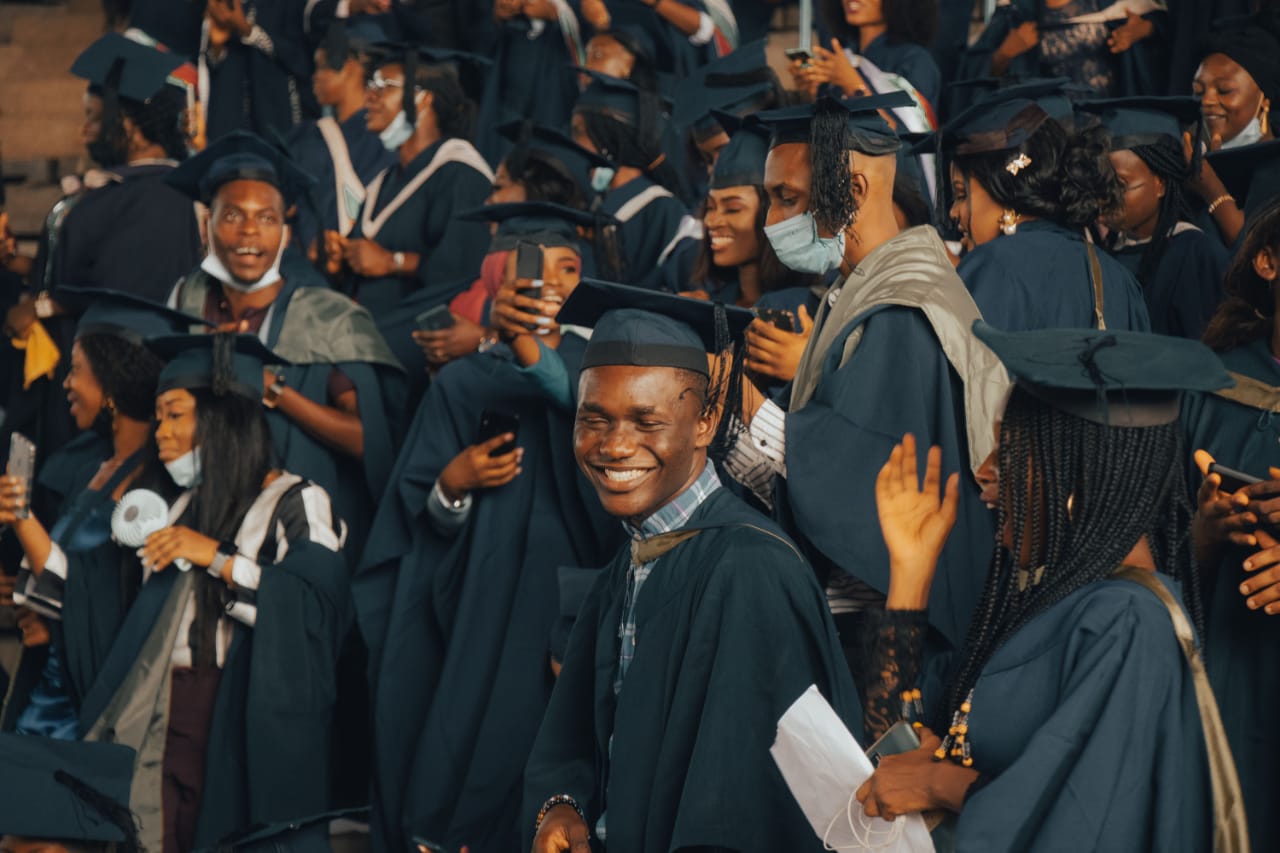
There is a familiar African story. A young person spends years in school, earns a degree, completes national service or an internship, and begins searching for work.
Then comes the question: “What can you actually do?” Suddenly, the certificate that looked so important at graduation is no longer enough.
This is not an argument against university education. Degrees matter. Professional qualifications matter. Knowledge matters. But there is a deeper question we need to ask: What exactly is education supposed to produce?
If education is meant to prepare people for work, citizenship, leadership and life, then perhaps the problem is not simply that Africa needs more education. Perhaps we also need to reconsider what our education is designed to produce. We need to decolonize education in Africa.
What Does It Mean to Decolonize African Education?
The phrase decolonizing education can sound like an invitation to throw away everything associated with the West. That is neither necessary nor intellectually useful.
Decolonizing African education is better understood as examining the assumptions, knowledge structures, priorities and purposes inherited through colonial education, and asking whether they still serve African societies well.
Africa did not begin learning when European missionaries arrived. In different parts of the continent, societies had systems for transmitting knowledge, values, skills, history and social responsibilities long before colonial rule. These systems varied considerably, so there was never one single “African education system.”
In Nigeria, for example, indigenous education existed alongside established Islamic scholarly traditions before Western missionary education expanded. Western education subsequently developed through missionary and colonial institutions and became increasingly important for access to new religious, administrative and professional opportunities.
The history is therefore more complicated than saying either “African education was perfect before colonialism” or “Africa had no meaningful education before Western schooling.” Neither claim is adequate.
Why Are Degrees Not Enough?
A degree demonstrates that someone has completed a programme of study. It does not automatically demonstrate that the graduate can solve problems, create economic value, work effectively with others, lead responsibly, understand institutions or improve the society around them.
Across Africa, access to education has expanded significantly, but learning outcomes and the transition from education to productive employment remain major challenges. The World Bank has highlighted the gap between simply attending school and actually acquiring the knowledge and skills needed to thrive. So the problem is not that Africans are becoming too educated. The problem is that credentials can sometimes become disconnected from capability.
A person can spend four years learning about something without learning how to use that knowledge to solve a real problem. And society can make this worse.
A young person says: “I want to learn tailoring.”
Someone responds: “But you are too intelligent for that.”
A graduate says: “I want to build a business.”
Someone asks: “After all the money your parents spent on university?”
We have sometimes created a hierarchy in which certain forms of work are considered respectable because they come with certificates, while practical competence is treated as secondary. That is a problem.
A country needs graduates, yes. But it also needs builders, technicians, farmers, researchers, entrepreneurs, artisans, teachers, healthcare workers, designers, engineers, administrators, policymakers and institutional leaders.
The real concern is not whether someone has a degree. It is: What can that person’s knowledge, character and skills contribute to society?
How Does Functional Education Differ From Credential-Focused Education?

Functional education connects learning to practical problem-solving, ethical responsibility, economic value creation, civic participation and leadership. It does not reject academic education. Instead, it asks academic education to become more useful.
The African Union’s Continental Education Strategy for Africa places emphasis on knowledge, competencies, skills, innovation, creativity and the relationship between education, training and Africa’s development. That points toward an important distinction.
Credential-focused education asks: “What qualification did you obtain?”
Functional education asks: “What can you do with what you have learned?”
The first question is not useless. But the second is essential.
A medical degree should ultimately produce someone capable of caring for patients. An engineering degree should produce someone capable of designing and improving systems.
A teaching qualification should produce someone capable of helping people learn. A business degree should develop the ability to understand and create value.
A political science degree should help someone understand institutions, power and public policy. The qualification is the container. Capability is the substance.
Education Should Produce More Than Job Seekers
One of the biggest limitations of a credential-focused mindset is that it can train people primarily to look for positions inside existing systems. But nations also need people capable of creating, improving and rebuilding those systems. This distinction is especially important in Africa, where millions of young people enter labour markets every year.
Education cannot create jobs by itself. Economic policy, investment, infrastructure, institutions and private-sector growth matter enormously. But education can influence what people are capable of doing when opportunities emerge.
It can produce people who know how to:
- identify problems;
- design solutions;
- create businesses;
- improve processes;
- conduct research;
- communicate ideas;
- work across differences;
- understand institutions;
- use technology;
- manage resources;
- and lead responsibly.
That is a very different vision from simply producing graduates who spend years refreshing job boards.
Education should prepare people not only to find opportunities, but also to create value.
The Building Nation Builders Four-Literacies Framework
If education is going to contribute to nation-building, literacy must mean more than reading, writing and passing examinations. The Building Nation Builders framework provides a useful way to think about four dimensions of education that can complement conventional academic learning.
1. Spiritual Literacy: What Should Guide My Ability?
Knowledge gives people power. Spiritual literacy asks: What should guide how I use that power? This dimension concerns purpose, values, integrity, responsibility and stewardship.
A highly educated person can use intelligence to build institutions—or to exploit them. Technical competence without character can become dangerous.
Education therefore has to ask not only: “What do you know?” but also: “Who are you becoming, and what will you do with what you know?”
2. Social Literacy: How Does My Knowledge Contribute to Society?
No person succeeds entirely alone. Social literacy develops an understanding of community, relationships, cooperation, responsibility and citizenship. It asks: “Who is affected by what I do?”
A brilliant professional who cannot collaborate, communicate or understand the needs of others has only developed part of their potential. Nation-building requires people who can work together.
Hospitals require teams. Businesses require teams. Schools require teams. Governments require institutions made up of people who can cooperate.
Society itself is a collaboration project.
3. Economic Literacy: How Do I Create and Sustain Value?
Economic literacy is more than knowing how to earn a salary. It involves understanding value creation, productivity, enterprise, markets, resources and economic responsibility. A young person should be able to understand where value comes from.
- How does a business make money?
- Why does a product succeed?
- What makes a service useful?
- How can agriculture become more productive?
- Why do businesses fail?
- How does local production affect an economy?
- What does it mean to create something that people genuinely need?
These are not questions reserved for economics students. They are questions citizens, workers and entrepreneurs encounter every day. If education teaches people only to compete for existing jobs, the economy remains dependent on the systems already available. If education also teaches people how to create and sustain value, it expands the possibilities.
4. Political Literacy: How Do Institutions Actually Work?
Political literacy does not mean turning every classroom into a campaign ground. It means understanding governance, institutions, citizenship, public policy, power and civic responsibility.
A citizen who does not understand how institutions work may struggle to hold them accountable. A professional who does not understand policy may fail to recognise how government decisions affect their industry. A leader who does not understand institutions may confuse personal influence with effective governance.
Political literacy therefore asks a simple but powerful question: “How does the society around me actually work?” And once people understand how systems work, they become better positioned to improve them.
What Would Functional Education Look Like in Practice?
Functional education does not require us to abandon mathematics, literature, history, science, geography or other conventional subjects, but requires us to connect them more deliberately to life.
In Mathematics
Instead of only solving abstract problems, learners could apply mathematics to:
- household budgeting;
- business planning;
- statistics;
- public data;
- agricultural production;
- financial decisions.
In History
History can become more than memorising dates. Learners can ask: How did historical decisions shape the institutions we live with today?
In Economics
Students can examine actual businesses, industries and economic challenges within their communities. They can ask: What creates value here, and what prevents more value from being created?
In Science and Technology
Learning can move beyond memorising principles toward designing solutions to real environmental, agricultural, health and technological problems.
In Literature and Communication
Reading and writing can develop more than examination skills. They can develop:
- empathy;
- critical thinking;
- communication;
- cultural understanding;
- imagination;
- persuasion.
And perhaps assessment itself needs to change. Instead of asking only: “What do you remember?” we should increasingly ask: “What can you do with what you know?” That is not a lowering of academic standards but a demand for education to become more meaningful.
From Educated People to Nation Builders

This may be the most important shift. Education should not train Africans to see themselves only as people looking for opportunities inside systems created by somebody else. It should also develop people capable of understanding, improving and building the systems their societies depend upon.
- Schools.
- Businesses.
- Hospitals.
- Research institutions.
- Government agencies.
- Farms.
- Creative industries.
- Technology companies.
- Civil society organisations.
- Communities.
This does not mean rejecting foreign knowledge. Quite the opposite. A confident education system should enable learners to engage the best knowledge from anywhere while remaining capable of asking: “How does this apply to our context?”
Decolonization, therefore, should not mean intellectual isolation. It should mean intellectual agency. The ability to learn from the world without becoming incapable of thinking for yourself.
UNESCO’s work around the General History of Africa reflects one dimension of this broader effort: strengthening African perspectives and ensuring that African histories and contributions are properly represented within education.
The African Union’s continental education strategy similarly connects education with skills, innovation, creativity and sustainable development.
The objective is not simply to produce people who know more. It is to produce people who can do more with what they know.
What Does This Mean for African Parents, Educators and Leaders?
The responsibility does not belong to government alone.
- Parents have a role: Parents can stop treating certain careers as automatically more respectable than others.
- Educators have a role: Educators can create more opportunities for learners to solve real problems.
- Schools have a role: Schools can connect classroom learning with communities and workplaces.
- Employers have a role: Employers can participate more actively in developing practical skills.
- Religious institutions have a role: Leaders can invest in education that produces competence rather than simply counting enrolment figures.
- And young people can begin asking a question that is sometimes more valuable than: “What certificate will I get?” Ask: “What problem will I be able to solve?” That question can change the entire meaning of education.
Conclusion: Reclaiming the Purpose of Education
Africa needs education that produces greater capability.
We need graduates who can think. Professionals who can build. Leaders who can serve. Citizens who understand institutions. Entrepreneurs who create value. Researchers who ask useful questions. And skilled workers whose contribution is respected because society understands the value of what they do.
The conversation about decolonizing education must therefore go deeper than changing textbooks. It must ask: What kind of human being is our education system designed to produce? And then: What kind of nation can those people build?
This is ultimately a conversation about more than schools.
- It is about work.
- It is about dignity.
- It is about leadership.
- It is about responsibility.
- It is about the kind of society we are preparing the next generation to inherit—and the kind of society we are preparing them to build.
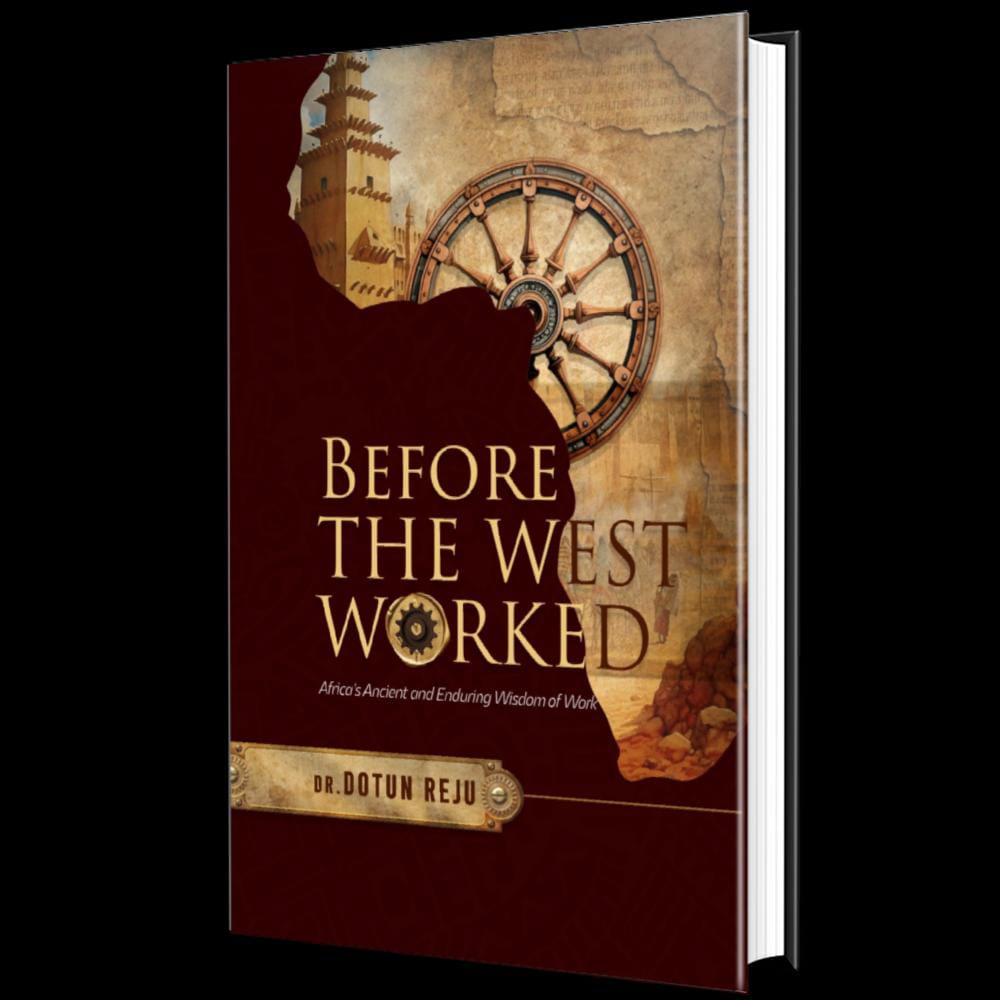
That larger question is explored through the historical relationship between Africa, work, purpose and nation-building in Dr. Dotun Reju’s Before the West Worked: Africa’s Ancient and Enduring Wisdom of Work. Grab a copy!