


Table of contents
- Introduction: Can You Find Your Calling in a System That Does Not Work?
- 1. What Does It Mean to Find Career Vocation in a Dysfunctional System?
- 2. How Do You Recognise a Dysfunctional System?
- 3. Vocation is More Than Following Your Passion?
- 4. How Can Emerging Leaders Navigate Dysfunction Without Losing Themselves?
- 5. Should You Stay, Leave, or Build Something Different?
- 6. A Practical Blueprint for Emerging Leaders: From Frustration to Transformation
- 7. What Does It Mean to Become a Transformational Leader?
- Conclusion: Your Vocation Is Bigger Than Your Current Environment
- Frequently Asked Questions
Introduction: Can You Find Your Calling in a System That Does Not Work?
What happens when you feel called to meaningful work, but the institutions around you seem designed to frustrate it?
You may enter a profession with a genuine desire to solve problems, develop people, create value, or contribute to society. Yet you encounter workplaces where competence is overlooked, political connections outweigh merit, responsibility is separated from authority, and innovation is discouraged. You may find yourself spending more energy navigating bureaucracy than doing the work you were trained to do.
For many emerging leaders, this is a defining career dilemma. Should you stay and try to change the system? Should you leave for an environment that better supports your values? Should you build something independently? Or should you learn to survive within the institution while preparing for a different future?
Finding career vocation in dysfunctional systems requires a more considered response than simply following your passion or persevering at all costs. It requires an understanding of vocation, an honest assessment of institutional realities, the development of professional agency, and the wisdom to distinguish between situations that can be improved and those that are steadily diminishing your capacity to contribute.
1. What Does It Mean to Find Career Vocation in a Dysfunctional System?
Career vocation is the developing sense of purpose that connects your abilities, values, responsibilities, and contribution to a meaningful form of work.
It is different from a job title, a professional identity, or a personal ambition. A job describes a role. A career describes a trajectory. Vocation concerns the deeper question of what your work is for and how your capabilities can serve a meaningful purpose. Vocation does not necessarily mean discovering one perfect occupation that you must pursue for the rest of your life. It may emerge through several roles, disciplines, organisations, and stages of professional development.
A teacher may discover that their deeper contribution lies in designing learning systems. A communications professional may realise that their strongest work involves helping institutions organise knowledge and communicate more effectively. An employee frustrated by weak organisational processes may develop a vocation for operational improvement or institutional design.
In each case, vocation becomes clearer through practice, reflection, and growing responsibility. A dysfunctional system complicates this process because the environment may reward behaviour that conflicts with your values or prevent you from using your abilities effectively.
Consider an emerging professional who values competence and accountability but works in an organisation where decisions are routinely influenced by personal relationships rather than transparent criteria. Their frustration may reveal a conflict between personal values and institutional practices. However, frustration alone does not establish vocation. It may identify what you oppose without clarifying what you are equipped to build.
The more useful deliberation is: What problem does this experience help me understand, and what capability can I develop to address it?
Your vocation may not be to remain in the institution that exposed the problem. It may be to become the kind of professional who can solve that problem elsewhere.
2. How Do You Recognise a Dysfunctional System?

Before deciding how to respond, emerging leaders must distinguish between ordinary organisational difficulties and deeper institutional dysfunction.
Every workplace experiences disagreement, resource constraints, imperfect decisions, and periods of uncertainty. These conditions do not automatically make an institution dysfunctional. Dysfunction becomes more evident when harmful patterns are persistent, normalised, and reinforced by the way the organisation operates.
Several warning signs deserve attention.
When incentives reward the wrong behaviour
An organisation may publicly value excellence while promoting people primarily for loyalty to influential individuals. It may celebrate innovation while penalising employees who question established practices. It may demand accountability from junior staff while protecting senior decision-makers from scrutiny.
In these situations, the formal values of the institution differ from the behaviours its incentives actually reward.
Emerging leaders must learn to examine not only what an organisation says but also what it consistently rewards, tolerates, and punishes.
When responsibility exceeds authority
You may be held accountable for outcomes without having the resources, decision-making power, or institutional support required to achieve them. This imbalance can produce frustration and burnout. It also reveals a structural problem: performance expectations are disconnected from the conditions necessary for performance.
Learning to identify this pattern helps emerging leaders distinguish between gaps in their own competence and obstacles created by the organisation.
When relationships replace systems
Trust and personal relationships can strengthen organisations. However, when processes depend entirely on personal connections, informal permission, or the goodwill of individual leaders, the institution becomes difficult to navigate fairly. Decisions become inconsistent. Knowledge remains concentrated in a few individuals. New employees struggle to understand expectations, and organisational continuity becomes fragile.
The problem is not that relationships matter. It is that relationships are being asked to perform functions that dependable systems should support.
When ethical compromise becomes the price of belonging
Perhaps the most serious warning sign is an environment in which participation requires repeated dishonesty, complicity in wrongdoing, exploitation, or the abandonment of essential professional standards.
No career opportunity automatically justifies the erosion of personal integrity. Emerging leaders should take these conditions seriously because prolonged exposure can normalise behaviour they initially found unacceptable.
Recognising dysfunction is not an excuse to become cynical. It is the beginning of informed judgement.
3. Vocation is More Than Following Your Passion?
Popular career advice often encourages people to follow their passion. Although interest and enthusiasm matter, they are insufficient foundations for a sustainable vocation. Passion describes what attracts your attention. Vocation also asks what you can become competent at, what responsibilities you are prepared to accept, and what contribution is genuinely useful to others.
A person may be passionate about education but need to develop curriculum design, assessment, management, or learning technology skills to contribute effectively. Someone interested in social change may need to understand policy, organisational behaviour, finance, or community development.
Purpose without competence can produce good intentions without meaningful results. Likewise, competence without purpose can result in professional achievement that feels disconnected from what matters to you.
A more complete understanding of vocation brings four elements together:
- Meaning: What problems, responsibilities, or forms of contribution matter deeply to you?
- Capability: What skills, knowledge, and judgement can you develop to address them?
- Service: Who benefits when you perform this work well?
- Sustainability: Can you pursue this contribution in a way that supports your financial needs, wellbeing, and long-term development?
These elements do not always align perfectly at the beginning of a career. They develop over time.
You may need to take a job primarily for income while building expertise in an area that better reflects your long-term direction. You may discover that your preferred field has limited opportunities and need to approach it through an adjacent profession. You may also find that a role you did not initially consider meaningful becomes valuable because of the problems you learn to solve.
Vocation is therefore not simply something you discover within yourself. It is something you clarify and develop through responsible engagement with the world.
4. How Can Emerging Leaders Navigate Dysfunction Without Losing Themselves?

The first practical task is to separate what you can influence from what you cannot control.
You may not be able to change an organisation’s leadership culture, eliminate political interference, or correct every structural weakness. You may, however, be able to improve a workflow, document a process, mentor a colleague, strengthen a professional relationship, or develop a skill that expands your future options.
This distinction protects you from two unproductive extremes: believing that everything depends on you, and assuming that nothing you do matters.
Develop professional agency
Professional agency is the capacity to make informed decisions, develop useful capabilities, and act responsibly within the constraints of your circumstances. It begins with asking better questions.
Instead of asking only, “Why is this organisation so dysfunctional?” ask, “What can I learn here? Which problems are within my influence? What evidence would help me decide whether to stay? What capabilities would make me more effective in another environment?”
These questions do not excuse institutional failure. They redirect attention towards decisions you can make.
Build competence that travels with you
One danger of working in a dysfunctional institution is becoming so occupied with its internal politics that you neglect your own development.
Protect time for learning and capability building. Develop skills that remain valuable beyond your current employer, such as communication, analytical thinking, project management, digital fluency, systems design, negotiation, and ethical decision-making.
Where possible, document your achievements and the problems you have helped solve. Maintain a portfolio of work that demonstrates your contribution without exposing confidential information.
Your professional value should not depend entirely on whether one institution recognises it.
Find relationships that strengthen your judgement
Emerging leaders need more than technical knowledge. They need people who can challenge their assumptions, provide perspective, and help them interpret difficult professional experiences.
Seek mentors, peers, professional communities, and advisers who demonstrate integrity and sound judgement. These relationships can help you distinguish between a difficult but valuable learning experience and an environment that is consistently harmful.
They can also expose you to alternative ways of organising work, leading people, and solving institutional problems.
Establish boundaries around ethical compromise
Not every organisational demand deserves compliance.
Emerging leaders should understand their professional obligations, document significant decisions where appropriate, seek legitimate advice, and use established reporting channels when necessary.
Where serious wrongdoing is involved, consider the risks of retaliation, applicable legal protections, and appropriate independent advice before acting.
There is a difference between learning to navigate an imperfect system and becoming complicit in its harmful practices. Adaptability is a leadership strength; the abandonment of integrity is not.
5. Should You Stay, Leave, or Build Something Different?

This is one of the most consequential questions emerging leaders face.
There is no universal answer. The right decision depends on the nature of the dysfunction, your ability to influence it, your personal circumstances, the opportunities available elsewhere, and the cost of remaining.
A practical decision framework can help.
Stay and contribute when meaningful influence is possible
Staying may be worthwhile when the organisation offers opportunities to learn, the dysfunction is not fundamentally incompatible with your values, and you can make a credible contribution to improvement.
You might improve a process, strengthen team communication, introduce clearer documentation, or help establish more reliable ways of measuring performance.
However, staying should involve a realistic assessment of what can change. Do not confuse loyalty with an unlimited obligation to endure dysfunction.
Leave when the environment persistently undermines your development or integrity
Leaving may be appropriate when repeated efforts at improvement produce no meaningful change, your health or professional development is deteriorating, or continued participation requires serious ethical compromise.
A decision to leave is not necessarily a rejection of your vocation. It may be a decision to pursue it under better conditions.
Where possible, plan the transition carefully. Consider your financial position, transferable skills, professional relationships, and realistic alternatives.
Not everyone has the resources to leave immediately. If departure is not currently feasible, focus on risk reduction, capability development, and preparation for future opportunities.
Build an alternative when existing structures cannot meet the need
Sometimes the experience of dysfunction reveals an opportunity to create something different.
You might develop a consultancy, learning programme, professional network, digital knowledge product, community initiative, or small enterprise that addresses a problem existing institutions have neglected.
Building an alternative does not necessarily mean founding a large organisation. It may begin with a small, tested solution that helps a particular group work, learn, or collaborate more effectively.
However, entrepreneurship should not be romanticised as an escape from institutional problems. Independent ventures also face financial constraints, governance challenges, difficult relationships, and operational pressures.
The question is not which path appears most heroic, but which path offers the most responsible and sustainable way to develop your capabilities and contribute meaningfully.
6. A Practical Blueprint for Emerging Leaders: From Frustration to Transformation

Finding vocation becomes more actionable when reflection is translated into a sequence of decisions and experiments.
The following six-stage blueprint offers a starting point.
Stage 1: Diagnose the environment
Describe the problems you are experiencing without relying only on general labels such as “bad leadership” or “a broken system.” Identify recurring patterns, their consequences, and the people affected.
Ask yourself: What happens repeatedly? Which incentives sustain the problem? What have previous attempts at improvement revealed?
The objective is to understand the system before deciding how to respond.
Stage 2: Clarify your values and direction
Identify the professional principles you want your work to reflect. These may include fairness, competence, service, creativity, accountability, learning, or the responsible use of authority.
Then connect those principles to the kinds of problems you want to solve. A value becomes more useful for career planning when you can describe how it influences your work.
Stage 3: Identify your distinctive contribution
Examine the intersection between your existing strengths, developing capabilities, and problems that matter to you. Ask what you can do particularly well, what others need, and which skills would increase the value of your contribution.
Do not assume that your current job title defines your full potential. Your abilities may transfer into another function, sector, or form of enterprise.
Stage 4: Run small experiments
Before making major career decisions, test possible directions through manageable projects.
Volunteer for a relevant assignment, build a portfolio piece, take a targeted course, contribute to a professional initiative, or develop a small solution to a problem you understand.
These experiments help you gather evidence about your interests, abilities, and the practical value of your work. They also reduce the pressure to discover your entire vocation through introspection alone.
Stage 5: Build your professional infrastructure
Treat your career as a system that requires ongoing maintenance and development.
Create a record of your work, maintain meaningful professional relationships, develop transferable skills, and establish financial habits that support informed career choices.
Where appropriate, document repeatable methods, lessons learned, and evidence of outcomes. The objective is to build a foundation from which you can make decisions with greater confidence and independence.
Stage 6: Review, decide, and adapt
Set a regular time to assess your progress.
What have you learned about yourself and the institution? Are you developing meaningful capabilities? Is your contribution producing useful outcomes? Are your ethical boundaries being respected? Have new opportunities emerged?
Use the answers to decide whether to deepen your current contribution, seek a different role, or begin building an alternative.
Vocation develops through reflection and action. A periodic review helps ensure that your career decisions respond to evidence rather than frustration alone.
7. What Does It Mean to Become a Transformational Leader?
Transformational leadership is often associated with inspiring people, articulating a vision, and motivating change. These capacities matter, but transformation requires more than inspiration.
It requires the ability to translate values into practices, develop people, improve processes, strengthen institutions, and establish conditions that allow progress to continue.
An emerging leader may begin by solving a small operational problem. Over time, that experience can develop into a deeper understanding of how incentives, relationships, resources, and organisational structures influence performance.
The leader learns to look beyond individual failures and examine the systems that repeatedly produce them.
For example, if an organisation depends on one employee to retain critical operational knowledge, the immediate problem may appear to be workload. A deeper diagnosis reveals a knowledge-management weakness. Documented processes, shared repositories, clear responsibilities, and staff development may provide a more durable solution.
This shift—from reacting to symptoms towards improving the conditions that produce them—is central to institutional transformation.
It also reveals why emerging leaders should resist defining themselves solely through the dysfunction they oppose. You are not required to spend your entire career fighting what is broken. You can develop the competence to build what works.
The ultimate objective is not simply to become more successful within an existing system. It is to help create environments in which competence is rewarded, responsibility is meaningful, knowledge is shared, and people can contribute with dignity.
Conclusion: Your Vocation Is Bigger Than Your Current Environment
Dysfunctional systems can obscure the possibilities of meaningful work. They can frustrate ambition, discourage competence, and create the impression that professional progress depends more on navigating power than developing value. Yet these environments can also reveal important questions about the kind of leader you want to become and the problems you are prepared to solve.
Finding career vocation in dysfunctional systems begins with honest diagnosis. It requires clarity about your values, commitment to developing competence, and the judgement to decide when to stay, when to leave, and when to build something different.
It also requires patience. Your vocation may become clearer through several roles and experiences rather than one defining moment. Some opportunities will help you discover what you do well; others will teach you what you cannot responsibly accept.
Neither experience has to be wasted if it contributes to wiser decisions and stronger capabilities.
For emerging leaders across Africa and beyond, the challenge is not simply to succeed despite institutional dysfunction. It is to develop the knowledge, character, and practical capacity to contribute to better institutions.
At the Centre for Transformational Leadership, we believe leadership begins with people who think clearly, act responsibly, and build systems that serve the common good.
Explore more CTL insights on leadership, work, institutional transformation, and human potential.
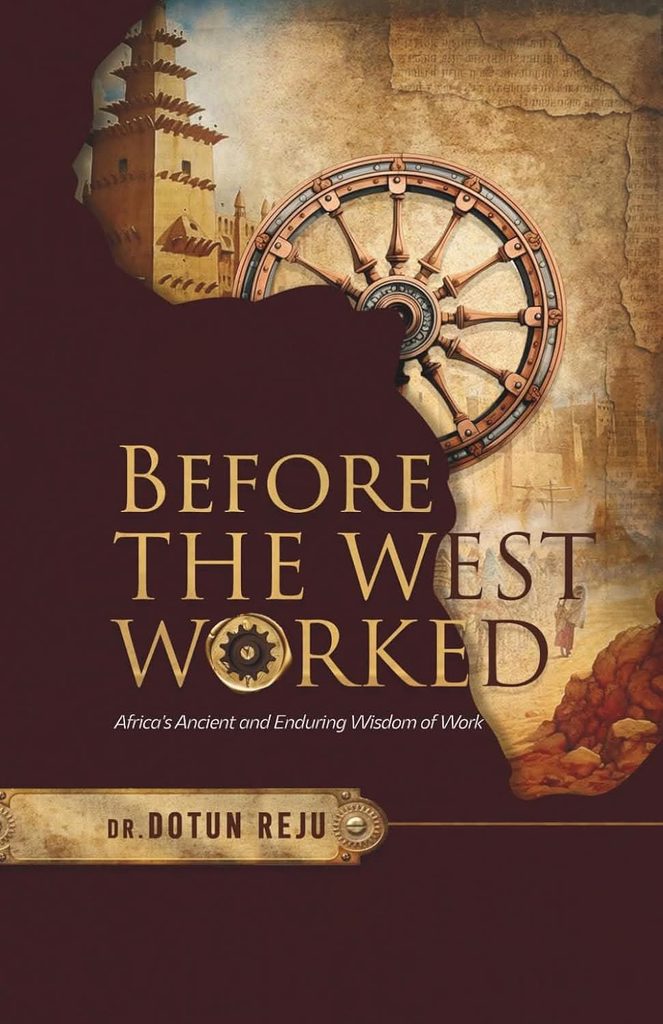
For a deeper perspective on African work culture, leadership, and the wisdom that can inform better institutions, explore Dr. Oladotun Reju’s Before the West Worked: Africa’s Ancient and Enduring Wisdom of Work.
Your current environment may shape the challenges you face, but it does not have to define the full scope of your vocation.
The question is what you will learn, what you will build, and what kind of institution or community will be stronger because of your work.
Frequently Asked Questions
Career vocation is a developing sense of purpose that connects your abilities, values, responsibilities, and professional contribution. It helps you understand not only what work you do, but why it matters and how it can serve others.
Begin by identifying recurring organisational problems, clarifying your values, and examining the capabilities you can develop. Test possible career directions through practical projects, seek trustworthy mentors, and assess whether your current environment offers a realistic opportunity for growth and meaningful contribution.
Leaving may be appropriate when the environment persistently undermines your integrity, wellbeing, or professional development, particularly when reasonable attempts at improvement have failed. Consider your safety, financial circumstances, available alternatives, and transition plan before making a decision where possible.
Emerging leaders can start by identifying problems they can influence, improving processes, documenting knowledge, developing colleagues, strengthening accountability, and demonstrating ethical conduct. Larger changes often require collective effort, institutional support, and sustained commitment.
A job is a specific role or set of responsibilities. A career is the progression of professional experiences and opportunities over time. A vocation is the sense of purpose connecting your work and capabilities to a meaningful contribution. These three dimensions can overlap, but they are not identical.
Yes. Vocation does not require a senior title, formal authority, or business ownership. You can exercise leadership through the quality of your work, the way you develop others, the problems you solve, and the responsibility you demonstrate in your current role.
Clarify your professional boundaries, understand your obligations, maintain accurate records where appropriate, seek trusted advice, and use legitimate reporting channels when necessary. If serious misconduct is involved, consider the potential risks and seek appropriate independent guidance.
When people align their capabilities with meaningful problems and apply them responsibly, they can strengthen organisations, develop human potential, improve services, and create economic and social value. Nation building depends not only on individual ambition but also on the quality of the institutions people create and sustain.